
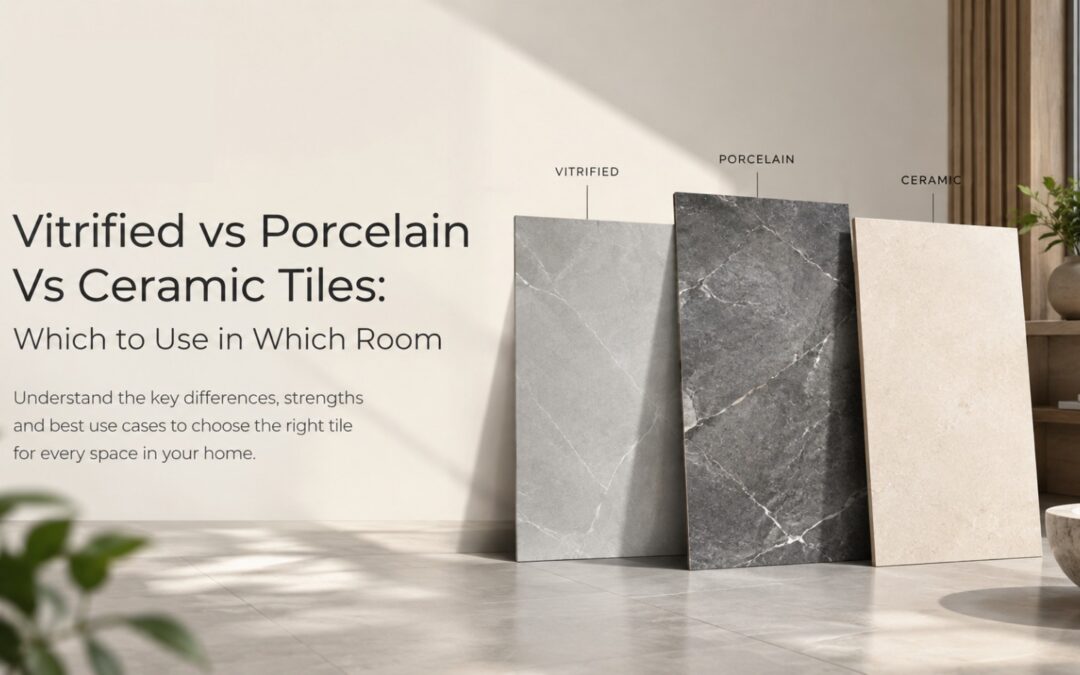
Choosing the right tiles for your home is not only about colour, pattern, or finish. The type of tile you select can affect durability, maintenance, water resistance, comfort, and the overall cost of your project.
Among the most commonly considered options are Vitrified vs Porcelain vs Ceramic Tiles. While these tiles can look similar, they differ in composition, manufacturing process, water absorption, strength, and ideal applications.
If you are researching vitrified vs porcelain tiles, or trying to understand the difference between vitrified and ceramic tiles, this guide will help you choose the right option for each room in your home.
1. What Are Vitrified, Porcelain and Ceramic Tiles?
Before comparing the three, it is important to understand what each tile type actually means.
What Are Vitrified Tiles?
Vitrified tiles are tiles manufactured using a mixture of materials such as clay, silica, quartz, and feldspar. These materials are processed and fired at high temperatures, creating a dense and relatively low-porosity tile.
The vitrification process gives these tiles their characteristic strength, durability, and low water absorption.
Vitrified tiles are widely used in Indian homes because they are suitable for floors, walls, living rooms, bedrooms, kitchens, commercial spaces, and other high-traffic areas.
Common types include:
- Full-body vitrified tiles
- Double-charge vitrified tiles
- Glazed vitrified tiles (GVT)
- Polished glazed vitrified tiles (PGVT)
The choice between these types depends on the intended application, traffic level, finish, and design requirements.
What Are Porcelain Tiles?
Porcelain tiles are a type of highly refined ceramic tile made using carefully selected raw materials and fired at high temperatures.
They are generally denser and have very low water absorption. Porcelain tiles are known for their strength, durability, and suitability for demanding applications.
Porcelain tiles can be available in many finishes, including stone, marble, concrete, wood, and other decorative looks. This makes them popular for both residential and commercial interiors.
One important point when comparing vitrified vs porcelain tiles is that terminology can vary between markets and manufacturers. Some vitrified tiles can have characteristics that overlap with porcelain tiles. Therefore, instead of relying only on the name, homeowners should check technical specifications such as water absorption, breaking strength, intended application, and surface finish.
What Are Ceramic Tiles?
Ceramic tiles are generally made from natural clay and other mineral materials and then shaped and fired in a kiln.
Compared with many vitrified and porcelain options, conventional ceramic tiles can be more porous. However, modern ceramic tiles are available in many different specifications, so performance varies by product.
Ceramic tiles are commonly used for walls, backsplashes, bathrooms, kitchens, and areas where extremely high floor durability is not required.
Their large range of colours, patterns, textures, and finishes makes them a versatile option for interior design.
2. Water Absorption, Strength and Durability
When comparing porcelain vs ceramic tiles or vitrified vs porcelain, three important factors should be considered:
- Water absorption
- Strength
- Durability
Water Absorption
Water absorption indicates how much water a tile can absorb. Generally, a denser tile absorbs less water.
Porcelain tiles are typically associated with very low water absorption, making them suitable for areas where moisture resistance is important.
Vitrified tiles are also known for low water absorption because of their dense structure.
Ceramic tiles can have higher water absorption depending on their composition and manufacturing specification. Some ceramic tiles are specifically designed for wet areas, while others are primarily intended for walls or dry applications.
For bathrooms, balconies, utility areas, and other moisture-prone locations, always check the manufacturer’s technical specifications instead of choosing a tile based only on appearance.
Strength
Floor tiles need to withstand foot traffic, furniture loads, movement, and occasional impact.
Porcelain tiles are generally highly dense and strong, making them suitable for high-traffic applications.
Vitrified tiles are also widely used as flooring because they offer good strength and durability.
Ceramic tiles can work well in residential applications, particularly for walls and moderate-use areas, but the suitability of a particular ceramic tile depends on its technical specifications.
For flooring, look at factors such as breaking strength, abrasion resistance, slip resistance, and recommended usage.
Durability
Durability is not determined by tile material alone.
A tile’s lifespan can also depend on:
- Installation quality
- Subfloor condition
- Adhesive and grout selection
- Traffic level
- Maintenance
- Tile thickness
- Surface finish
- Intended application
For example, a decorative wall tile should not automatically be used on a high-traffic floor simply because it looks strong.
This is why understanding the difference between vitrified and ceramic tiles is only the first step. The final decision should also consider the manufacturer’s recommended application.
3. Cost Comparison: Vitrified vs Porcelain vs Ceramic Tiles
Tile prices can vary significantly depending on brand, size, finish, design, manufacturing technology, and origin.
In general, conventional ceramic tiles can be available at a more budget-friendly price point, while premium vitrified and porcelain tiles can cost more.
However, comparing only the price per square foot can sometimes be misleading.
Consider the complete project cost, including:
- Tiles
- Adhesive
- Grout
- Labour
- Cutting and wastage
- Transportation
- Maintenance
- Replacement costs
A slightly more expensive tile may make sense for a high-traffic area if it provides the required durability and performance.
Ceramic Tiles
Ceramic tiles can be an economical choice for walls, backsplashes, and selected residential applications.
They are particularly useful when homeowners want a wide variety of designs without necessarily requiring the performance characteristics of a premium floor tile.
Vitrified Tiles
Vitrified tiles are commonly selected for residential flooring because they combine durability, relatively low water absorption, and a wide variety of designs.
They are available across different price segments, allowing homeowners to choose according to their project requirements and budget.
Porcelain Tiles
Porcelain tiles can be positioned at a higher price point, particularly for premium finishes, large formats, imported products, specialised surfaces, and high-end designs.
They can be a suitable investment for homeowners looking for a combination of durability and premium aesthetics.
Tip: When comparing prices, always compare tiles with similar size, finish, thickness, technical specifications, and intended application.
4. Best Tile for Each Room
There is no single tile that is automatically the best for every room.
The right choice depends on the room’s moisture level, traffic, maintenance requirements, safety requirements, and desired appearance.
Living Room
The living room is usually one of the most visible areas of a home and may experience regular foot traffic.
For living-room flooring, vitrified and porcelain tiles are popular options.
Large-format vitrified tiles can create a spacious appearance with fewer visible grout lines. Marble-look, stone-look, concrete-look, and polished surfaces can also create a premium interior.
Recommended options:
- Vitrified tiles
- Glazed vitrified tiles
- Porcelain tiles
For a busy household, prioritise durability and easy maintenance alongside appearance.
Bedroom
Bedrooms generally experience less traffic than living rooms, so homeowners have more flexibility.
Vitrified tiles can be a practical flooring choice because they are easy to maintain and available in numerous designs.
Porcelain tiles can also work well if you want a premium surface or a specific stone or wood appearance.
Wood-look porcelain or vitrified tiles can create a warm visual effect while retaining the practical characteristics of hard-surface flooring.
Recommended options:
- Vitrified tiles
- Porcelain tiles
- Selected ceramic floor tiles
Comfort and visual warmth may be more important here than maximum abrasion resistance.
Kitchen
The kitchen requires tiles that are easy to clean and appropriate for exposure to moisture, stains, food spills, and regular activity.
For kitchen floors, vitrified or porcelain tiles can be considered depending on the required performance.
For kitchen walls and backsplashes, ceramic tiles can be an attractive and practical option because of the wide variety of colours, patterns, and decorative designs available.
Recommended options:
Floor:
- Vitrified tiles
- Porcelain tiles
Walls/backsplash:
- Ceramic tiles
- Glazed vitrified tiles
- Porcelain tiles
For kitchen flooring, also consider slip resistance rather than selecting a tile based solely on gloss or appearance.
Bathroom
Bathrooms require careful tile selection because they are exposed to water and humidity.
For bathroom floors, choose tiles with suitable water resistance and, importantly, an appropriate slip-resistant surface.
Porcelain and vitrified tiles can be considered for bathroom floors, depending on the product specification.
Ceramic tiles can also be used, particularly on bathroom walls.
Recommended options:
Bathroom floor:
- Porcelain
- Suitable vitrified tiles
- Appropriate anti-skid floor tiles
Bathroom walls:
- Ceramic
- Porcelain
- Glazed vitrified tiles
Avoid selecting highly polished flooring solely for its premium appearance if the surface does not provide appropriate slip resistance for a wet environment.
Balcony
Balconies are exposed to moisture, dust, temperature changes, and sometimes outdoor traffic.
A suitable outdoor or balcony floor tile should have the required water resistance, strength, and slip resistance.
Porcelain and suitable vitrified tiles can be considered for balconies when their specifications are appropriate for the application.
Recommended options:
- Outdoor-rated porcelain
- Suitable vitrified tiles
- Anti-skid tiles designed for outdoor use
Always confirm whether the selected tile is rated for exterior application.
Entrance and High-Traffic Areas
Entryways can experience significant foot traffic and may collect dust, sand, or outdoor dirt.
For these areas, durability and resistance to wear should be major considerations.
Full-body vitrified tiles and suitable porcelain tiles can be considered for high-traffic applications.
Recommended options:
- Full-body vitrified tiles
- High-performance porcelain tiles
- Commercial-grade tiles where required
5. Quick Decision Chart
| Room / Area | Vitrified | Porcelain | Ceramic |
| Living Room | Excellent option | Excellent option | Depends on product |
| Bedroom | Excellent option | Excellent option | Suitable for selected applications |
| Kitchen Floor | Suitable | Suitable | Depends on specification |
| Kitchen Wall | Suitable | Suitable | Excellent option |
| Bathroom Floor | Suitable with appropriate finish | Suitable with appropriate finish | Depends on product |
| Bathroom Wall | Suitable | Suitable | Excellent option |
| Balcony | Suitable if rated for outdoor use | Suitable if rated for outdoor use | Depends on product |
| High-Traffic Area | Suitable | Suitable | Depends on specification |
| Decorative Wall | Suitable | Suitable | Excellent option |
| Budget-Focused Project | Available in different price segments | Can be premium | Often economical |
Remember: This chart is a starting point. The technical specifications of the individual tile should always be checked before purchase.
Vitrified vs Porcelain Tiles: What Should Homeowners Check?
If you are specifically researching vitrified vs porcelain tiles, don’t make the decision based only on the tile name.
Ask your tile supplier or showroom about:
1. Water Absorption
Lower water absorption is generally important for moisture-prone applications.
2. Breaking Strength
This helps determine whether the tile is appropriate for the expected loads and application.
3. Slip Resistance
This is particularly important for bathrooms, balconies, kitchens, entrances, and outdoor areas.
4. Surface Finish
Choose between polished, matte, satin, textured, structured, or other finishes depending on the room.
5. Abrasion Resistance
For high-traffic floors, the surface needs to be suitable for the expected level of wear.
6. Recommended Application
Always check whether the manufacturer recommends the tile for:
- Walls
- Residential floors
- Commercial floors
- Bathrooms
- Outdoor areas
- Heavy-traffic locations
Porcelain vs Ceramic Tiles: Which Should You Choose?
The comparison between porcelain vs ceramic tiles is often presented as a simple choice between two materials. In reality, the correct option depends on the application.
If your priority is a highly dense, low-absorption tile for demanding applications, porcelain may be worth considering.
If you need decorative wall tiles, backsplash tiles, or an economical option for suitable applications, ceramic tiles can provide plenty of design flexibility.
For homeowners, the key is to match the tile’s technical characteristics with the room rather than choosing purely based on price or appearance.
What Are the Best Tiles for Flooring in India?
When looking for the best tiles for flooring India, there is no universal answer.
India has a wide variety of residential environments, from apartments and independent homes to villas and commercial properties. Climate, moisture, foot traffic, lifestyle, maintenance expectations, and design preferences can all influence the right choice.
For many residential flooring applications, vitrified and porcelain tiles are commonly considered because of their durability and low water absorption.
However, the best tile for your home is ultimately the one whose specifications match the room and expected usage.
For example:
- Living room: vitrified or porcelain
- Bedroom: vitrified or porcelain
- Kitchen floor: vitrified or porcelain with suitable slip characteristics
- Bathroom floor: suitable anti-skid porcelain/vitrified tile
- Bathroom wall: ceramic, porcelain, or vitrified
- Balcony: outdoor-rated porcelain or suitable outdoor tile
- High-traffic areas: high-performance vitrified or porcelain
Final Thoughts
The choice between vitrified, porcelain, and ceramic tiles should be based on more than just appearance or price.
Vitrified tiles are a popular option for residential flooring because of their dense structure, durability, low water absorption, and wide design range.
Porcelain tiles are known for their high density and very low water absorption and can be considered for demanding residential and commercial applications.
Ceramic tiles offer extensive design flexibility and can be particularly useful for walls, backsplashes, bathrooms, and selected flooring applications.
If you are still unsure which tile to select, start with the room rather than the tile. Identify the expected traffic, moisture exposure, maintenance requirements, safety needs, and aesthetic goal. Then compare tiles based on their technical specifications.
Whether you are renovating one room or selecting tiles for an entire home, a professional tile showroom can help you compare sizes, finishes, textures, colours, and technical specifications before making the final selection.
The right tile is not simply the one that looks good in the showroom. It is the tile that performs well in the space where you plan to use it.