
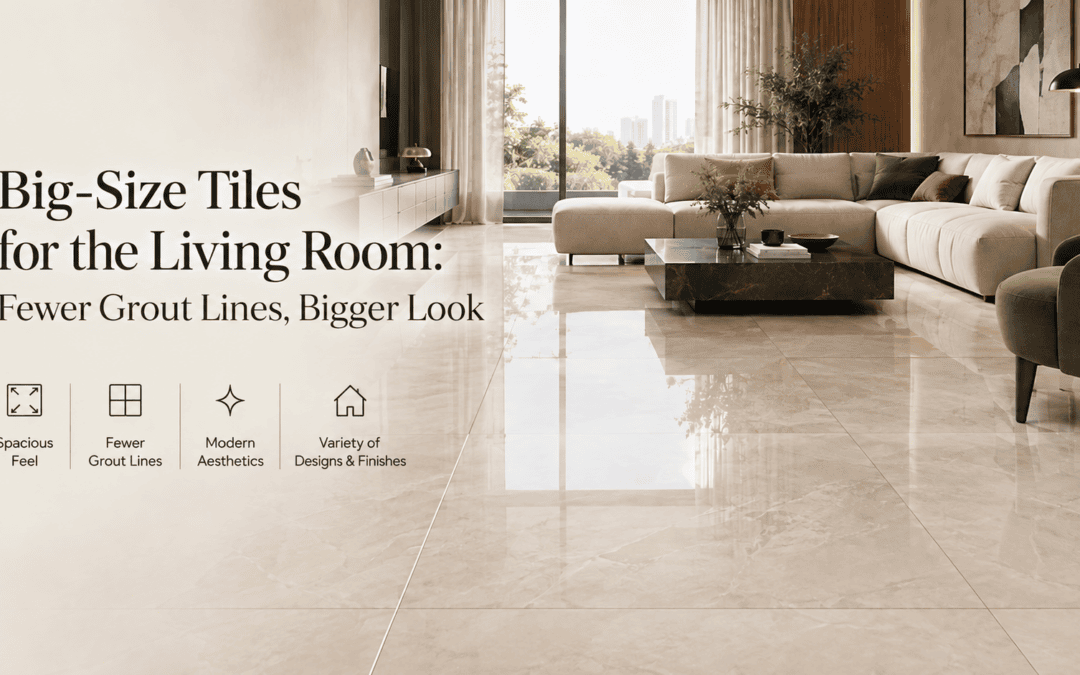
kitchen Tiles Design – The living room is one of the most important spaces in any home. It is where families spend time together, guests are welcomed, and the overall interior style of a home comes to life. From contemporary apartments to spacious luxury residences, flooring plays a major role in determining how the living room looks and feels. One flooring trend that continues to attract homeowners and interior designers is the use of big-size tiles for the living room.
Large-format tiles create a clean, spacious appearance by reducing the number of grout lines across the floor. They are available in a variety of colours, textures, finishes, and stone-inspired designs, making them suitable for different interior styles. Whether you prefer a minimalist living room, a luxurious marble-inspired interior, or a warm contemporary setting, larger tiles can help you achieve a cohesive design.
However, choosing the right tile involves more than selecting the biggest available size. Room dimensions, lighting, furniture placement, installation quality, and budget all influence the final result.
In this guide, we explore what qualifies as a big-size tile, its advantages and limitations, suitable sizes for different living room layouts, and essential installation tips to help you make an informed flooring decision.
1. What Counts as a Big-Size Tile?
Big-size tiles, also known as large-format tiles, are tiles that cover a larger surface area than conventional flooring tiles. While there is no single universal definition used across every manufacturer, tiles measuring 600 × 1200 mm and above are commonly considered large-format options in residential interiors.
These tiles allow larger sections of the floor to be covered with fewer individual pieces, creating a more continuous visual effect.
Popular Big-Size Tile Dimensions
600 × 1200 mm tiles
These rectangular tiles are a popular option for modern living rooms. Their elongated shape can create a balanced appearance and works well in apartments, medium-sized homes, and open-plan interiors. Depending on the design, they can resemble natural marble, limestone, concrete, or other materials.
800 × 1600 mm tiles
These larger rectangular tiles create an expansive appearance with fewer joints than smaller formats. They can be particularly effective in spacious living rooms, premium apartments, and luxury residential projects where a refined flooring design is desired.
1200 × 1200 mm tiles
Square large-format tiles offer a symmetrical appearance and can work well in square or nearly square living rooms. Their proportions can create a balanced flooring pattern when the layout is planned correctly.
Extra-large slab tiles
Big slab tiles flooring options may measure 1200 × 2400 mm or larger, depending on the manufacturer and product range. These formats can create a striking, almost continuous stone-inspired surface. They require careful planning, appropriate handling equipment, and experienced installers.
The availability of specific sizes, thicknesses, finishes, and designs varies by collection.
Why Are Larger Tiles Becoming Popular?
Modern interiors often favour uncluttered surfaces, open layouts, and visually connected spaces. Large-format tiles support these preferences by reducing the number of visible grout joints and allowing patterns to extend across larger areas.
For homeowners exploring premium flooring, BR Ceramics’ big-size tiles collection is a useful starting point for comparing available designs and formats.
2. Benefits of Big-Size Tiles for the Living Room
Choosing big-size tiles for the living room offers several practical and aesthetic benefits. The right option can make a room appear more open, simplify routine floor care, and complement a wide range of interior styles.
A More Spacious and Open Appearance
One of the biggest advantages of large-format tiles is their ability to create a sense of visual continuity. Smaller tiles introduce more joints across the floor, creating a busier pattern. Larger tiles reduce these interruptions, helping the flooring appear more uniform.
This can be particularly useful in compact apartments, where a continuous floor surface may help the room feel less visually crowded.
For example, a small living room with light-coloured 600 × 1200 mm tiles and minimal contrasting grout can appear more open than a similar room with a highly segmented flooring pattern. The actual room dimensions remain unchanged, but the visual effect can feel more spacious.
Fewer Grout Lines for a Cleaner Look
Grout lines are necessary for most tiled installations, but they can influence the overall appearance of a floor. Big-size tiles reduce the number of joints required across a given area.
This creates a cleaner visual effect that works especially well with contemporary, minimalist, and luxury interiors.
A marble-inspired tile with subtle veining, for example, can create an elegant appearance when its pattern flows across larger sections of the floor. With fewer grout lines interrupting the design, the overall surface can feel more cohesive.
For the best result, choose a grout shade that complements the tile colour rather than creating unnecessary contrast, unless a defined grid pattern is part of your design.
Easier Routine Cleaning
Fewer grout joints can also make everyday floor maintenance more convenient. Grout lines may collect dust, spills, and dirt over time, depending on the grout type, surface condition, and cleaning routine.
Because large-format tiles require fewer joints, there may be fewer areas where dirt accumulates between tiles.
Most suitable porcelain and glazed ceramic flooring options can be cleaned with routine sweeping or vacuuming and a compatible damp mop. Always follow the manufacturer’s cleaning recommendations, particularly for textured surfaces and specialised finishes.
It is important to remember that fewer grout lines do not make a floor maintenance-free. Spills should still be cleaned promptly, and grout should be maintained as recommended.
A Premium and Sophisticated Finish
Large-format tiles are often associated with luxury residential and commercial interiors. Their proportions can create a refined appearance, especially when paired with coordinated wall colours, contemporary furniture, and carefully planned lighting.
Popular designs include marble-inspired surfaces, understated stone textures, neutral concrete effects, and soft beige or grey finishes.
If you are planning an upscale living room, explore luxury tiles from BR Ceramics to consider designs that complement your preferred interior style.
Greater Design Continuity Across Open Spaces
Many modern homes combine the living room, dining area, and other common spaces into one open layout. Using the same large-format tile throughout these connected areas can help create a consistent flooring scheme.
For example, 800 × 1600 mm tiles in a neutral stone-inspired design can visually connect the living and dining areas without introducing unnecessary changes in flooring material.
Before choosing this approach, check the room dimensions, door thresholds, adjoining floor levels, and installation requirements to ensure the same format works throughout the space.
3. Drawbacks of Large-Format Tiles: Handling, Levelling and Cost
Although large-format tiles offer several advantages, they also require careful consideration. Their size can introduce practical challenges during transportation, installation, and future repairs.
Handling and Transportation
Large tiles can be heavy, bulky, and difficult to manoeuvre through narrow passages, staircases, lifts, and doorways. Extra-large slabs may require specialised carrying equipment and additional installers.
Before ordering, check access to the property and confirm that the tiles can be safely transported to the installation area. This is especially important for high-rise apartments and homes with restricted entry points.
Subfloor Levelling Is Essential
Large-format tiles are less forgiving of uneven substrates than smaller tiles. Even minor variations in the subfloor can make it difficult to achieve a consistent finished surface.
Poor preparation may lead to uneven tile edges, commonly called lippage, and can affect the overall appearance of the flooring.
The installer should inspect the substrate, identify high and low spots, and prepare the surface according to the tile manufacturer’s specifications and applicable installation standards.
Using a tile levelling system may help maintain alignment during installation, but it cannot replace proper subfloor preparation.
Higher Installation Costs
The cost of large-format tiles depends on the material, finish, design, brand, and selected dimensions. Some premium collections and extra-large slabs may have a higher purchase price than conventional tile formats.
Installation costs may also be higher because the work can require additional labour, specialised tools, suitable adhesives, and more detailed cutting and handling.
When comparing options, consider the complete installed cost rather than the tile price alone. Ask for a quotation covering the tiles, wastage allowance, adhesive, grout, substrate preparation, labour, transportation, and any specialised equipment.
Repairs and Replacement
A damaged large-format tile can be more challenging to replace because of its size and handling requirements. Replacement tiles may also be difficult to match if the original collection is discontinued.
It is sensible to order an appropriate spare quantity from the same production batch where possible and retain the product details for future reference.
Are Large-Format Tiles Suitable for Every Living Room?
Not necessarily. The right format depends on the room dimensions, shape, access, design preferences, and installation conditions.
A smaller room can work beautifully with 600 × 1200 mm tiles, while an expansive living room may accommodate 800 × 1600 mm tiles or larger slabs. A professional site assessment can help determine the most practical choice.