
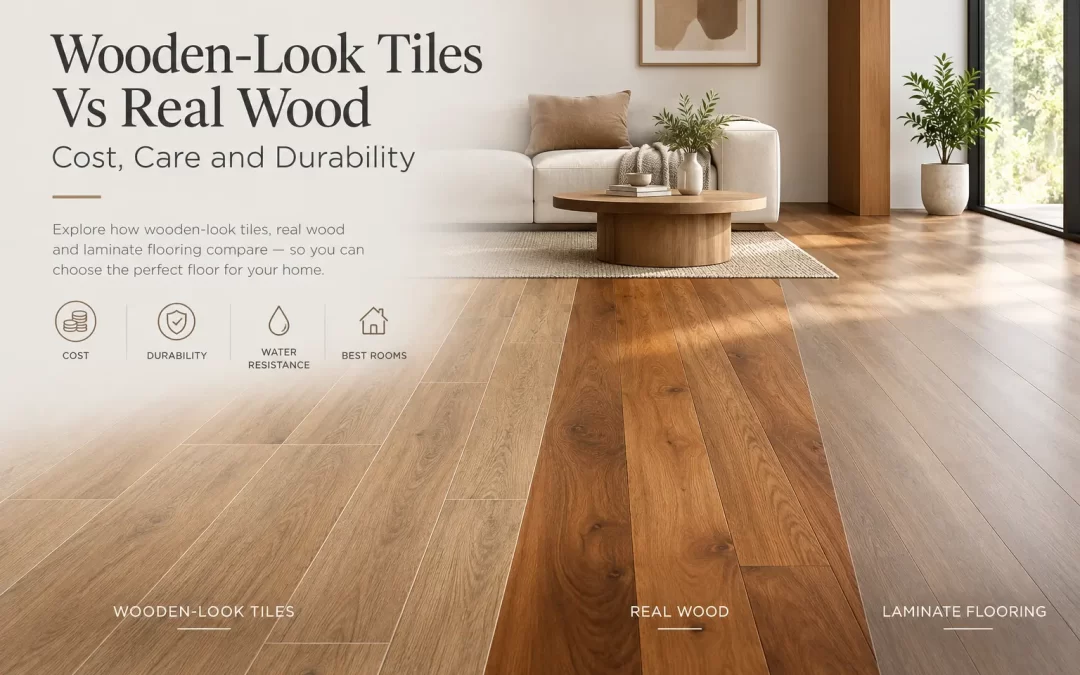
Choosing the right flooring can transform your home, influencing its appearance, comfort, maintenance requirements and long-term value. Wooden flooring has always been popular for its natural warmth, timeless appeal and ability to make interiors feel welcoming. However, real wood is not the only way to achieve this look. Today, wooden tiles for floor applications offer homeowners an attractive alternative, combining the appearance of natural timber with the practical advantages of ceramic and porcelain surfaces.
But which option is better for your home: wooden-look tiles or real wood? The answer depends on your budget, lifestyle, preferred aesthetics and willingness to maintain your flooring over time.
In this guide, we compare wooden-look tiles and real wood across installation costs, 10-year ownership expenses, water resistance, termite protection, scratch resistance, comfort and suitability for different rooms. We also explore how wooden-look tiles compare with laminate flooring to help you make an informed decision.
Whether you are renovating your bedroom, designing a new living room or planning flooring for your entire home, this comparison will help you choose a surface that balances style, durability and long-term value.
1. What Are Wooden-Look Tiles?
Wooden-look tiles are ceramic or porcelain tiles designed to replicate the appearance of natural timber. Using modern digital printing and surface-texturing technologies, manufacturers reproduce wood grains, knots, colour variations and other details associated with real wooden planks.
These tiles are available in various shades, including natural oak, walnut, teak-inspired brown, honey, grey and darker wood finishes. Their plank-style formats and realistic patterns allow homeowners to create interiors that resemble traditional hardwood flooring without relying on actual timber.
For homeowners exploring different finishes, BR Ceramics offers wooden tiles for floor that can help bring a warm, wood-inspired aesthetic to residential spaces.
Ceramic vs porcelain wooden-look tiles
Although both materials can replicate wood, their properties differ.
Ceramic wooden-look tiles: These are suitable for many residential applications, depending on their specifications. They can offer an attractive wood-inspired finish for bedrooms, living areas and other appropriate indoor spaces.
Porcelain wooden-look tiles: Porcelain tiles are generally denser and have lower water absorption than conventional ceramic tiles. When correctly specified and installed, they are particularly useful in areas where moisture resistance and durability are important.
Explore the porcelain tiles collection to understand the options available for different flooring requirements.
What makes wooden-look tiles different from real wood?
Real wood is a natural material with unique grain patterns, texture and variations. Wooden-look tiles reproduce these visual characteristics while offering a hard, tile-based surface.
The main difference is in performance. Natural wood can react to humidity, moisture and temperature changes, whereas suitable ceramic and porcelain tiles are generally more dimensionally stable under normal indoor conditions.
Wooden-look tiles also offer flexibility in interior design. They can complement contemporary, rustic, Scandinavian, minimalist and traditional Indian home interiors.
For homeowners who want nature-inspired interiors beyond timber patterns, nature-inspired tiles from BR Ceramics are another option to explore.
2. Cost Comparison Over 10 Years
The initial installation price is only one part of flooring expenditure. To understand which material offers better value, homeowners should consider installation, cleaning, maintenance, repairs and potential replacement over time.
Wooden-look tiles and real wood have different cost structures, and the final expense depends on the product selected, installation conditions, room size and local labour rates.
Initial installation cost
The cost of wooden-look tiles varies according to material, size, finish, brand and design. Porcelain tiles with highly detailed wood-grain finishes may cost more than basic ceramic alternatives.
Real wood flooring also varies considerably in price. Engineered wood, solid hardwood and different timber species have different material and installation costs. Subfloor preparation, underlay, protective coatings and specialist labour can further influence the final budget.
Laminate flooring is another alternative that may offer a lower initial cost than some real wood options. However, its performance depends on the product’s construction, moisture protection and installation quality.
| Cost factor | Wooden-look tiles | Real wood | Laminate |
| Initial material cost | Varies by tile type and finish | Varies by timber and construction | Often budget-friendly |
| Installation | Requires tile-laying expertise | May require specialist fitting | Usually a floating or click-lock system |
| Routine cleaning | Generally straightforward | Requires material-appropriate care | Usually straightforward |
| Periodic refinishing | Not normally required for the tile surface | May be required for some wood floors | Generally cannot be refinished like solid wood |
| Moisture-related risk | Low for the tile body; grout and installation still matter | Depends on wood type and construction | Depends on product and water exposure |
| Potential replacement | Individual tiles may be replaceable | Boards may be repairable or replaceable | Damaged planks may be replaceable, depending on the system |
What does flooring cost over 10 years?
A 10-year comparison should account for the full cost of ownership rather than just the purchase price.
Consider the following hypothetical example for a 500-square-foot room. These figures are illustrative planning estimates, not current BR Ceramics prices or market quotations. Actual costs will vary by city, material, product quality and labour.
| Expense over 10 years | Wooden-look tiles | Real wood |
| Initial material and installation | ₹75,000 | ₹1,25,000 |
| Routine maintenance allowance | ₹10,000 | ₹20,000 |
| Periodic treatment or refinishing | ₹0 | ₹30,000 |
| Repairs and contingency | ₹5,000 | ₹15,000 |
| Illustrative 10-year total | ₹90,000 | ₹1,90,000 |
In this example, wooden-look tiles cost ₹1,00,000 less over ten years. However, this difference is not universal. Premium tiles can be expensive, and some engineered wood products may require less maintenance than certain solid hardwood floors.
The figures should be replaced with actual quotations before making a purchasing decision. They also exclude financing costs, major water damage, structural repairs and any residual value at the end of the period.
Why long-term costs matter
Wooden-look tiles generally do not need sanding, polishing or wood-specific protective treatments. Their everyday care is usually limited to sweeping, vacuuming and damp mopping with a suitable cleaner.
Real wood may require periodic refinishing, protective treatment or repairs, depending on its construction, traffic levels and exposure to moisture. High-quality engineered wood can have different maintenance requirements from solid hardwood.
The practical takeaway: If you want flooring that offers a wood-inspired appearance with relatively predictable maintenance, wooden-look tiles can be a strong long-term choice. Compare the complete installed cost, not just the price per square foot.
3. Water, Termite and Scratch Resistance
Durability is one of the biggest reasons homeowners consider wooden-look tiles instead of real wood. Flooring must withstand everyday movement, accidental spills, furniture, children, pets and changing indoor conditions.
Here is how the three popular options compare.
Water resistance
Wooden-look porcelain tiles generally perform very well in moisture-prone environments because the tile body absorbs very little water. Ceramic tiles also offer a practical flooring surface, although their water absorption depends on the particular product.
However, the flooring system is more than the tile itself. Grout joints, waterproofing, substrate preparation and installation quality all affect how moisture behaves beneath the finished surface.
Real wood can absorb moisture and may expand, contract, warp or develop surface damage if exposed to spills, leaks or persistent humidity. Engineered wood may offer improved dimensional stability, but its moisture performance depends on the construction and manufacturer’s specifications.
Laminate flooring varies widely. Some modern products feature water-resistant cores and sealed joints, but water resistance should not automatically be confused with complete waterproofing.
For bathrooms, kitchens, utility areas and other spaces where moisture is a concern, choose a tile specifically suitable for the application. Also check its slip resistance, especially in wet areas.
Termite resistance
Termites can damage wood-based materials, potentially affecting wooden flooring and the underlying timber structure. The risk depends on the building, local conditions and the materials used.
Ceramic and porcelain tiles are inorganic materials and are not a food source for termites. This makes wooden-look tiles an attractive option for homeowners concerned about termite-related damage to wood flooring.
However, tiles do not eliminate every termite risk in a building. Termites may still affect timber doors, furniture, skirting, structural wood and other susceptible materials. Appropriate building maintenance and pest management remain important.
Laminate flooring typically contains wood-based components, so its termite resistance depends on its construction and any relevant treatment.
Scratch and impact resistance
Wooden-look tiles generally resist everyday surface scratching well, although performance varies by product, finish and usage. Sand, grit and heavy furniture can still damage surfaces, and dropped heavy objects may chip or crack a tile.
Real wood can develop scratches, dents and marks from footwear, furniture and pets. Some solid hardwood floors can be sanded and refinished, depending on their thickness and condition. Engineered wood has more limited refinishing potential depending on the thickness of its real-wood wear layer.
Laminate flooring often has a protective wear layer, but scratches, chipped edges and moisture damage can be difficult to repair invisibly.
Before buying tiles, ask about the product’s technical specifications, intended application, abrasion performance where relevant and recommended cleaning methods.
| Performance factor | Wooden-look tiles | Real wood | Laminate |
| Water resistance | Generally excellent for suitable porcelain products | Sensitive to moisture exposure | Product-dependent |
| Termite damage to flooring material | Not susceptible in the same way as wood | Possible | Depends on wood-based construction |
| Surface scratches | Generally resistant, but not scratch-proof | Can scratch and dent | Depends on wear layer |
| Heavy impact | May chip or crack | May dent | May chip or damage |
| Long-term upkeep | Usually low | May require periodic treatment | Usually low, but damaged sections can be difficult to repair |
For many busy households, wooden-look tiles offer a practical balance of appearance and everyday durability.
4. Look and Feel Underfoot
Cost and durability are important, but flooring is also something you see and walk on every day. The right choice should suit your interior design preferences and comfort expectations.
Do wooden-look tiles look like real wood?
Modern wooden-look tiles can reproduce fine grain patterns, knots, natural colour variation and plank-style proportions. Some products also feature textured surfaces that imitate the feel of timber.
The quality of the result depends on the tile design, printing technology, surface texture, pattern variation and installation.
For a more natural appearance, consider the following:
- Colour variation: Choose shades that complement your furniture, wall colours and lighting.
- Plank format: Elongated tiles can help recreate the proportions of wooden floorboards.
- Surface texture: A suitable textured finish can add visual depth and a more natural feel.
- Grout colour: Choose a grout shade that complements the tile and avoids unnecessarily strong grid lines.
- Installation pattern: A staggered or straight-lay pattern can influence the final look. Follow the manufacturer’s guidance on permissible offsets to minimise lippage.
For example, warm brown wooden-look tiles can complement neutral walls and wooden furniture, while lighter oak-inspired shades work well in contemporary, minimalist and Scandinavian-inspired interiors.
Are wooden tiles comfortable underfoot?
One difference homeowners notice is temperature. Real wood generally feels warmer to the touch than ceramic or porcelain tiles under similar indoor conditions. Wooden-look tiles can feel cooler, particularly in air-conditioned rooms or during winter.
Tiles are also hard underfoot. This makes them durable for everyday movement but potentially less forgiving when standing for long periods.
Rugs, runners and suitable footwear can improve comfort in bedrooms and living areas. Underfloor heating may also be compatible with certain tile installations, provided the heating system and installation are designed accordingly.
Real wood usually offers a warmer, more yielding sensation underfoot, depending on its construction and the subfloor. Laminate can provide a different feel depending on its underlay and installation system.
Which looks more luxurious?
Neither material is automatically more luxurious. Premium real wood offers the distinctive character of natural timber, while carefully selected wooden-look tiles can create a refined, contemporary interior with consistent colour and grain patterns.
The best choice depends on the overall design, product quality, installation workmanship and how the flooring complements other finishes in your home.
If you prefer a coordinated natural aesthetic, explore wooden-look tiles alongside other nature-inspired tile designs to find a finish that suits your space.
5. Best Rooms for Wooden Tiles
Wooden-look tiles are versatile, but selecting the correct product for each room is essential. Consider moisture exposure, foot traffic, cleaning requirements and the overall design.
Living room
The living room is an excellent place to use wooden-look tiles. Their wood-inspired appearance creates a welcoming atmosphere while providing a hard-wearing surface for daily family activities and visitors.
Lighter shades can make smaller spaces feel more open, while darker tones can create a dramatic setting when paired with suitable lighting and furniture.
Large-format or plank-style designs can also help create visual continuity across open-plan living and dining areas.
Bedroom
Wooden tiles for bedroom flooring are popular with homeowners who want a warm, natural appearance without the maintenance associated with some wood products.
Light oak-inspired shades can complement neutral bedding and soft furnishings. Medium brown finishes work well with traditional furniture, while darker tones can create a more sophisticated look.
Because tiles can feel cooler than wood, consider bedside rugs and soft textiles to improve comfort.
For bedrooms, prioritise the finish, colour, surface feel and visual balance with the furniture. You should also check that the selected product is suitable for indoor flooring.
Kitchen
Kitchens experience frequent spills, food stains, foot traffic and regular cleaning. Suitable wooden-look tiles can provide the appearance of timber without the same moisture sensitivity as many wood flooring products.
Choose a floor tile appropriate for kitchen use, with suitable slip resistance and a surface that can be cleaned according to the manufacturer’s recommendations. Promptly clean spills and ensure grout joints are properly maintained.
Bathroom
Wood-inspired tiles can introduce a spa-like appearance to bathrooms, balancing the visual warmth of timber with the practicality of tile surfaces.
However, bathroom selection requires particular care. Choose products specifically suitable for the intended wet or dry area and check slip-resistance ratings, especially for shower floors. Correct waterproofing, drainage and installation are essential.
Not every wooden-look tile is suitable for every bathroom surface.
Balcony and covered outdoor spaces
Wooden-look tiles can create a natural connection between indoor and outdoor spaces. They are worth considering for suitable balconies, terraces and covered outdoor areas.
Before choosing a product, confirm that it is rated for the intended exposure to weather, temperature changes and moisture. Outdoor flooring generally requires suitable slip resistance, drainage and installation materials.
Commercial and high-traffic areas
For home offices, entrance areas and other spaces with frequent movement, porcelain wooden-look tiles may be worth considering because of their durability and relatively straightforward maintenance.
The selected tile must still meet the performance requirements of the specific application.
| Room | Suitability of wooden-look tiles | Important consideration |
| Living room | Excellent option | Coordinate colour with furniture and lighting |
| Bedroom | Excellent option | Add rugs for a warmer feel |
| Kitchen | Very good with the right product | Check slip resistance and cleaning requirements |
| Bathroom | Suitable with careful selection | Wet-area rating, waterproofing and slip resistance |
| Balcony | Product-dependent | Outdoor suitability and weather exposure |
| Entrance or home office | Very good with suitable specifications | Foot traffic and abrasion performance |
6. Wooden-Look Tiles vs Laminate: Which Is Better?
Homeowners often compare tiles with laminate because both can reproduce the appearance of wood without the expense of premium hardwood.
The main difference lies in their construction. Wooden-look tiles have a ceramic or porcelain body, whereas laminate typically consists of a decorative image layer, protective wear layer and wood-based or composite core.
Tiles are generally better suited to areas where moisture exposure is a concern, provided the correct tile is installed properly. Laminate can be an appealing option for dry indoor rooms where a floating installation and a different underfoot feel are priorities.
| Feature | Wooden-look tiles | Laminate flooring |
| Appearance | Realistic wood-inspired patterns and textures | Printed wood patterns |
| Water performance | Generally strong, particularly with porcelain | Depends on product and joint protection |
| Installation | Requires tile adhesive, appropriate substrate and grout | Often uses a click-lock system |
| Underfoot feel | Hard and potentially cool | Can feel softer with suitable underlay |
| Repairs | Individual tiles may be replaceable | Individual planks may be replaceable, depending on the system |
| Maintenance | Usually straightforward | Usually straightforward |
| Best suited for | Long-term flooring across many suitable residential areas | Dry indoor areas where laminate’s specific characteristics are preferred |
If your priority is a wood-inspired appearance combined with moisture resistance and low routine maintenance, wooden-look tiles deserve serious consideration. If your priority is a different underfoot feel and a floating installation, laminate may be worth comparing.
For a broader view of tile materials and finishes, browse the BR Ceramics porcelain tile collection.
7. How to Choose the Right Wooden-Look Tiles
Before finalising your flooring, evaluate more than the colour and design.
1. Decide on the material. Ceramic and porcelain tiles have different technical properties. Choose according to the room’s requirements rather than appearance alone.
2. Check the finish. Matte, textured and other finishes create different visual effects. For wet areas, verify the product’s suitability and slip resistance.
3. Select the right shade. Lighter wood-inspired finishes can create an airy appearance, while deeper shades add visual richness. Consider natural and artificial lighting before making a decision.
4. Review tile dimensions. Wooden plank tiles can imitate floorboards effectively. Check the room’s proportions and the manufacturer’s installation recommendations.
5. Account for installation costs. Include adhesive, grout, labour, wastage, substrate preparation and any required waterproofing in your budget.
6. Request physical samples. Digital images do not always reproduce the exact colour, texture or finish. View samples in your home’s lighting and alongside your furniture, wall colours and other finishes.
7. Ask about maintenance and technical specifications. Confirm the product’s intended use, water absorption, surface characteristics and recommended cleaning procedures.
At BR Ceramics (BRAQ), homeowners can explore wood-inspired flooring alongside other tile styles to find options that match their design preferences and project requirements.
Frequently Asked Questions
1. Are wooden tiles better than real wood?
Wooden-look tiles are often a practical choice for homeowners who prioritise moisture resistance, termite resistance of the flooring material and low routine maintenance. Real wood may be preferable for those who value the unique character and warmer feel of natural timber. The better option depends on your budget, lifestyle and preferred appearance.
2. Are wooden tiles for floor durable?
Yes, suitable ceramic and porcelain wooden-look tiles can be highly durable for residential flooring. Their performance depends on product quality, installation, usage and maintenance. Although they generally resist everyday wear well, tiles can still chip or crack under heavy impact.
3. Are wooden-look tiles waterproof?
Many porcelain wooden-look tiles have very low water absorption, but the complete floor is not automatically waterproof. Grout joints, the substrate, installation and waterproofing system also matter. For wet areas, select a product and installation system specifically suited to the application.
4. Do wooden tiles feel like real wood?
Wooden-look tiles can reproduce timber grain patterns and textures convincingly, but they usually feel harder and cooler than natural wood. Textured finishes and rugs can help improve the overall experience, although they cannot completely replicate the feel of timber.
5. Are wooden tiles suitable for bedrooms?
Yes. Wooden tiles for bedroom flooring can create a warm, natural-looking interior while keeping maintenance relatively simple. Choose a suitable finish and shade, and consider bedside rugs if you prefer a softer, warmer feel when walking barefoot.
6. What is the difference between wooden plank tiles and regular tiles?
Wooden plank tiles are designed to resemble long wooden floorboards, often featuring elongated dimensions and timber-inspired patterns. Regular tiles may feature stone, concrete, marble or other designs and can be available in square or rectangular formats.
7. Are wooden tiles more affordable than real wood?
They can be, particularly when comparing suitable tile products with premium hardwood and accounting for maintenance over time. However, prices vary significantly. Compare material, installation, maintenance and repair costs using actual quotations for your project.
8. Wooden-look tiles vs laminate: which is better for Indian homes?
Wooden-look tiles can be especially practical in Indian homes where frequent cleaning, seasonal humidity and occasional spills are considerations. Laminate may be suitable for dry indoor areas, depending on its specifications. Neither option is universally better, so evaluate the intended room, product quality and installation requirements.
9. Can wooden-look tiles be used in kitchens and bathrooms?
Yes, provided you select tiles appropriate for the application. In kitchens, consider cleaning requirements and slip resistance. In bathrooms, pay particular attention to wet-area suitability, slip resistance, waterproofing and drainage.
10. How do I maintain wooden-look tiles?
Sweep or vacuum regularly to remove dust and grit, and damp mop using a cleaner recommended for the tile. Clean spills promptly and maintain grout joints. Avoid abrasive cleaning products unless the manufacturer confirms they are suitable.
Conclusion: Make the Right Flooring Choice for Your Home
Wooden-look tiles and real wood each have their own advantages. Real wood offers natural variation, a distinctive texture and a warmer sensation underfoot. Wooden-look tiles offer a practical way to achieve a similar visual effect while generally requiring less routine maintenance and providing better resistance to moisture and termite damage to the flooring material.
For homeowners seeking a balance between design, durability and long-term upkeep, wooden tiles for floor applications are an option worth exploring. They can work beautifully in living rooms, bedrooms, kitchens and other suitable spaces when the correct product is selected and installed properly.
The final decision should reflect your room requirements, budget, lifestyle and personal preferences. Compare samples, review technical specifications and calculate the complete installation cost before committing.
Explore Wooden-Look Tiles at BR Ceramics (BRAQ)
Ready to find a wooden finish that complements your home?
Visit BR Ceramics to explore wooden-look tiles, compare finishes and choose a design suited to your space. Our team can help you explore options for your flooring project.
Visit our website: Explore Wooden Tiles
Discover more: Porcelain Tiles | Nature-Inspired Tiles
Visit our experience centres to view wooden tile samples and make a more confident flooring decision.