
Introduction
The puja room is one of the most meaningful spaces in an Indian home. Whether it is a dedicated prayer room, a compact mandir in the living room, or a beautifully designed corner for daily worship, every detail contributes to its atmosphere. From the colour of the walls to the flooring beneath the mandir, thoughtful design choices can make this space feel peaceful, welcoming and easy to maintain.
As families prepare their homes for Navratri and Diwali between October and November, puja room renovation often becomes part of the festive preparation. New decorations, fresh paint, lighting and flooring can help create a clean and inviting setting for prayers, aarti and family gatherings.
Choosing the right puja room tiles is an important part of this process. The flooring should complement the mandir design, offer a practical surface for everyday use and remain easy to clean after oil lamps, incense, flowers and festive rituals. At the same time, the tiles should reflect the aesthetic you want, whether that means the timeless appeal of marble, the versatility of vitrified tiles or the traditional character of natural stone.
In this guide, we explore different mandir flooring tiles, wall finishes, colour combinations and design ideas to help you select tiles that balance beauty, functionality and long-term value.
1. What Should You Look for in Puja Room Flooring?
Before choosing a colour or pattern, consider how your puja room is used. A floor that looks beautiful in a showroom should also work well during daily worship and special occasions.
Prioritise grip and everyday safety
Puja rooms may occasionally have water from cleaning, oil from lamps or other substances on the floor. A highly polished surface can become slippery when wet, so grip deserves careful consideration.
When comparing mandir flooring tiles, look for a finish suitable for the room’s actual usage. Matt, satin and selected textured finishes may offer better traction than highly polished alternatives, depending on the product. Ask the tile supplier about the surface’s slip resistance and suitability for your intended application.
If your family regularly performs rituals involving water, consider how the flooring will behave when damp. You can also use a designated, stable lamp tray and keep the area around the mandir free from spills.
Choose tiles that are easy to clean
Flowers, kumkum, turmeric, incense ash, oil and ghee can leave marks if they are not cleaned promptly. For this reason, easy maintenance should be a key consideration when selecting puja room flooring.
Vitrified tiles are often worth considering because their dense surface generally makes routine cleaning convenient. Marble and natural stone can also work beautifully, but their maintenance requirements depend on the stone, finish and protective treatment.
For regular cleaning, use a soft mop and a cleaner recommended for the specific tile material. Avoid harsh chemicals or abrasive cleaning tools unless the manufacturer confirms they are suitable.
Match the tile size to the room
A compact mandir corner may look more balanced with smaller-format tiles or carefully planned layouts. A spacious prayer room can accommodate larger-format tiles that create a more continuous appearance.
Large tiles can reduce the number of grout joints, while smaller tiles may help achieve decorative patterns or detailed borders. The final result depends on room dimensions, installation quality and the chosen design.
Consider grout and installation
Grout colour can influence the overall appearance of the floor. Matching grout creates a seamless look, while contrasting grout highlights the tile pattern.
In a prayer room, grout should also be easy to maintain. Ask your installer about appropriate grout, joint widths and cleaning methods. Before purchasing, check the tile’s recommended application and ensure the subfloor is properly prepared.
2. Marble and Marble-Look Vitrified Tiles
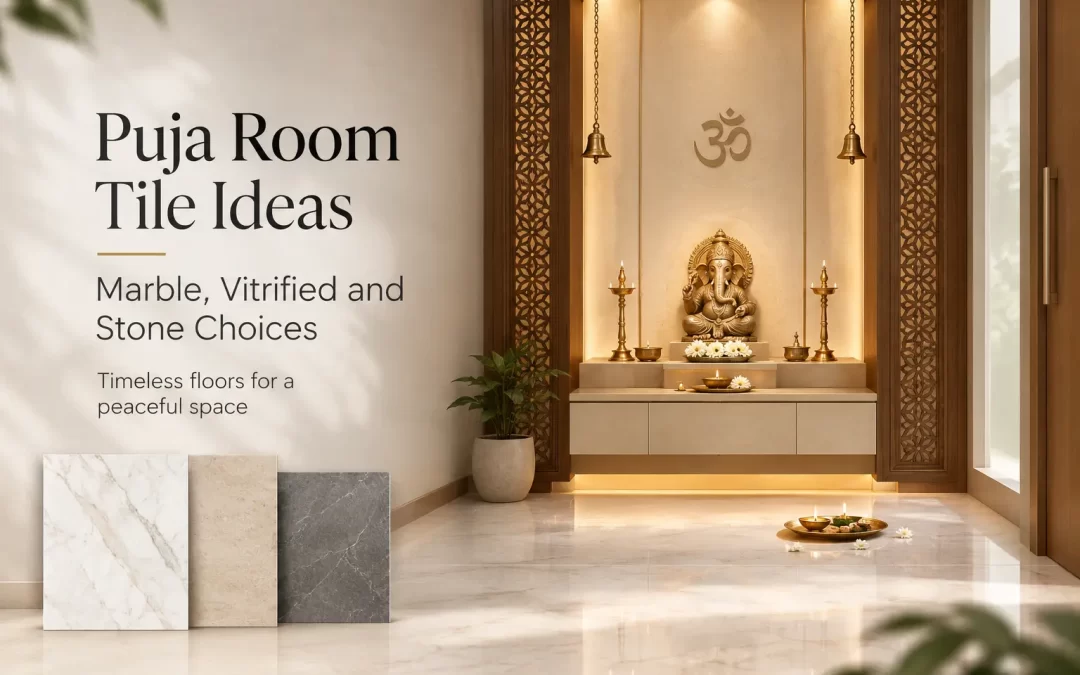
Marble-inspired surfaces remain popular for Indian prayer spaces because they create a bright, refined and timeless appearance. They work particularly well with traditional wooden mandirs, white marble shrines, brass accessories and warm lighting.
Homeowners considering marble tiles for pooja room interiors can choose between natural marble and vitrified tiles that recreate the appearance of marble.
Idea 1: Classic white marble flooring
White marble flooring can make a puja room feel spacious, serene and elegant. Its light appearance pairs naturally with white mandirs, brass diyas, silver accessories and traditional wooden doors.
This style works especially well in homes where the prayer space follows a minimalist or traditional design.
Natural marble has unique veining and variation, which gives each installation its own character. However, it may require sealing and more careful maintenance depending on the stone. Some varieties are also sensitive to acidic cleaners.
If you prefer genuine stone, discuss its maintenance requirements with your supplier before making a final decision.
Idea 2: Marble-look vitrified tiles
Marble-look vitrified tiles offer an alternative for homeowners who want a marble-inspired appearance with the practical benefits of vitrified surfaces.
Available in different shades, veining patterns and formats, these tiles can complement contemporary as well as traditional mandir interiors.
For example, white tiles with subtle grey veins can create a sophisticated background for a wooden mandir. Cream marble-look tiles can bring warmth to a room with beige walls, while soft ivory designs can complement brass and gold-toned decorations.
Explore the marble tiles collection at BR Ceramics for inspiration when comparing marble-inspired finishes.
Idea 3: White tiles with grey veining
White tiles with delicate grey veins are a versatile choice for homeowners who prefer understated elegance.
They work well with:
- White or off-white mandirs.
- Light wooden cabinets and carved panels.
- Brass bells, diyas and traditional accessories.
- Warm white LED lighting.
- Neutral wall colours and simple decorative borders.
This combination can create a calm visual setting without making the room feel overly decorative.
Idea 4: Cream and beige marble-inspired flooring
Pure white is not the only option for an elegant puja room. Cream, ivory and beige tiles can introduce warmth while maintaining a bright appearance.
These shades are particularly suitable for homes with wooden mandirs, earthy interiors or traditional carved furniture. They can also complement sandstone-inspired wall finishes and gold-toned decorative elements.
Beige flooring may help the room feel visually connected to adjoining spaces when the mandir is located in a living room or an open-plan interior.
Idea 5: Large-format marble-look tiles
Large-format tiles can create a more continuous floor appearance, especially in medium-sized and spacious puja rooms.
Fewer grout joints can help simplify routine cleaning, although the final result depends on the tile format, grout selection and installation quality.
Before selecting large tiles for a small prayer room, ask your installer to plan the layout carefully. The aim is to avoid awkward cuts around the mandir base, doorways and corners.
Explore more options: Browse marble tiles and vitrified tiles to compare finishes and find a design that suits your home.
3. Stone and Heritage-Inspired Puja Room Tiles
Marble-inspired flooring is not the only way to create a beautiful prayer space. Natural stone aesthetics, traditional patterns and heritage-inspired designs can bring depth, character and a distinctly Indian feel to the interior.
These styles work particularly well in homes with carved wooden mandirs, traditional architecture, decorative arches or handcrafted accessories.
Idea 6: Stone-look flooring for a natural appearance
Stone-look tiles can introduce earthy tones and subtle surface variation into a puja room.
Depending on the design, they may resemble limestone, sandstone or other natural stone surfaces. Beige, muted brown and soft grey finishes can create a grounded appearance that complements wooden furniture and brass accessories.
Stone-look vitrified tiles may be worth considering if you want a natural aesthetic with convenient routine maintenance.
When choosing a finish, compare the appearance, slip resistance and cleaning requirements of the actual product rather than relying on colour alone.
Idea 7: Traditional heritage patterns
Heritage-inspired tiles can help create a mandir that feels connected to traditional Indian design.
Patterned tiles may be used across the entire floor or as a decorative feature around the mandir. Floral motifs, geometric designs and traditional-looking borders can add character without requiring elaborate architectural changes.
To keep the room balanced, combine patterned flooring with relatively simple walls and furniture. If the mandir already features intricate carvings, a more restrained tile pattern may work better.
Explore the heritage tiles collection at BR Ceramics for inspiration.
Idea 8: Decorative borders around the mandir
A tile border can visually distinguish the prayer area from the rest of the room, especially when the mandir is located in a larger living space.
For example, a light marble-look floor can be framed with a complementary darker border. Alternatively, a subtle geometric design can outline the mandir platform without competing with the shrine itself.
Keep the border proportionate to the available floor area. In compact rooms, narrow borders generally create a more balanced appearance than oversized decorative frames.
Idea 9: Terracotta-inspired colours
Terracotta-inspired shades, warm brown tones and muted earthy finishes can give a puja room a traditional character.
These colours pair well with carved wooden mandirs, brass lamps and natural decorative elements. They may also be suitable for homes that use earthy finishes throughout their interiors.
If you prefer the appearance of traditional materials but want a different maintenance profile, compare suitable tile alternatives with your supplier.
4. Wall Tiles and Backdrop Ideas for a Beautiful Mandir
Flooring establishes the foundation of the design, but the wall behind the mandir often becomes its main visual feature.
A well-planned backdrop can make even a compact prayer corner feel thoughtfully designed. The key is to coordinate the wall finish with the floor rather than selecting both independently.
Idea 10: White tiles for a bright mandir backdrop
White tiles for pooja room walls can create a clean, light-filled appearance. They work especially well in compact apartments where the prayer area has limited natural light.
Glossy white wall tiles can reflect light and make the backdrop appear brighter. However, the suitability of the finish depends on lighting, cleaning requirements and the overall design.
Pair white walls with a wooden mandir, brass accessories or a subtle marble-look floor for a balanced result.
Idea 11: Marble-look feature walls
A marble-look feature wall can create an elegant backdrop without requiring marble across every surface.
Consider a white background with grey veining, a warm ivory finish or a design with more pronounced natural-looking patterns. The choice should complement the mandir’s material and the room’s lighting.
If the floor already features prominent veining, select a simpler wall design to avoid visual clutter.
Idea 12: Decorative panels and patterned backdrops
Patterned tiles can introduce a focal point behind the mandir. Depending on your preference, the design may be geometric, floral or inspired by traditional architectural motifs.
A decorative panel works particularly well when the surrounding walls and flooring are relatively understated.
Plan the placement around the mandir’s height, shelves and lighting. This ensures that the main pattern remains visible rather than being hidden behind the shrine or accessories.
Idea 13: Coordinate floor and wall finishes
A coordinated floor-and-wall combination can make the entire prayer area feel more cohesive.
Try these combinations:
- White marble-look flooring with a matching white backdrop.
- Beige flooring with an ivory feature wall.
- Stone-look flooring with a simple cream wall finish.
- Light vitrified tiles with a decorative heritage-inspired panel.
For smaller rooms, using a consistent colour family can help create a sense of continuity. In larger spaces, a contrasting feature wall can add definition.
Remember that wall tiles and floor tiles may have different application requirements. Select products specifically suitable for the surface where they will be installed.
5. Puja Room Tile Colours Indian Families Prefer
Colour plays an important role in the overall atmosphere of a prayer space. While personal preferences and family traditions vary, certain colour combinations are popular because they complement traditional accessories and a wide range of interior styles.
White: A timeless choice
White is a versatile option for homeowners seeking a clean and peaceful aesthetic.
It works well with marble-inspired flooring, wooden mandirs, brass diyas and decorative lighting. White tiles can also make smaller spaces feel more open.
However, white flooring may show certain types of dirt and marks more clearly. Choose a finish that is practical for your cleaning routine.
Cream and ivory: Warm and understated
Cream and ivory are suitable for homeowners who prefer a softer alternative to bright white.
These shades work well with traditional furniture, beige walls and gold-toned accessories. They can also help connect the prayer area with the rest of a home’s neutral interior.
Beige and earthy tones: Natural and welcoming
Beige, sand and muted brown shades can create a warm environment, particularly when paired with wooden mandirs and stone-inspired finishes.
They are suitable for both traditional and contemporary interiors and can complement natural textures.
Grey and white: Contemporary elegance
Grey-and-white combinations are worth considering for modern homes with clean lines and minimalist mandir designs.
Light grey veining can introduce subtle contrast without overpowering the prayer space. If you choose darker grey flooring, balance it with lighter walls and suitable lighting.
Traditional accents: Gold, terracotta and decorative details
Gold-toned accessories, terracotta-inspired colours and heritage patterns can introduce a traditional character without requiring bold colours across the entire floor.
For a balanced design, keep the main flooring neutral and use stronger colours in a border, feature panel or decorative element.
How to choose the right colour for your home
Before finalising a tile, consider the size of the prayer room, the colour of the mandir, available natural light and the adjoining interior.
A practical approach is to shortlist two or three tile options and view physical samples under the room’s actual lighting. Check how they look alongside the mandir, wall colour and decorative accessories.
Also compare the actual finish, texture and maintenance requirements. Photographs can help with inspiration, but they may not accurately represent the tile’s colour or surface.
6. How to Choose the Right Puja Room Tiles: A Practical Checklist
Before purchasing tiles for your mandir, use the following checklist to compare your options.
1. Measure the area: Record the room dimensions and identify the mandir footprint, doorways and any corners requiring cuts.
2. Decide on the material: Compare natural marble, marble-look vitrified tiles, stone-look designs and heritage-inspired options.
3. Check surface suitability: Ask about slip resistance, cleaning requirements and whether the selected finish is appropriate for the intended application.
4. Match the colour palette: Coordinate the floor with the mandir, walls, lighting and accessories.
5. Plan the layout: Consider tile size, grout colour, decorative borders and the placement of cuts.
6. Confirm maintenance requirements: Understand whether sealing, specialised cleaning products or other care procedures are recommended.
7. Calculate the quantity: Ask your installer or supplier to estimate the tile requirement, including a suitable allowance for cutting and wastage.
8. Review samples: Compare physical samples in the actual room lighting before placing your order.
9. Plan before the festive season: If you are renovating before Navratri or Diwali, allow enough time for selection, delivery, installation, grouting and cleaning.
10. Compare complete project costs: Consider tiles, installation, adhesive, grout, finishing and any additional preparation rather than comparing tile prices alone.
This approach helps you select tiles that suit both your design preferences and the practical requirements of daily worship.
Frequently Asked Questions About Puja Room Tiles
1. Which tiles are best for a puja room?
The best puja room tiles depend on your design preferences, maintenance requirements and budget. Marble offers natural elegance, marble-look vitrified tiles provide a marble-inspired aesthetic, and stone-look or heritage tiles can create a more traditional appearance.
Compare surface suitability, slip resistance, cleaning requirements and the intended application before choosing.
2. Are vitrified tiles suitable for mandir flooring?
Vitrified tiles can be a practical option for mandir flooring because many varieties are easy to clean and available in a wide range of designs.
However, finishes differ. Choose a product suitable for the room’s usage, check its slip resistance and follow the manufacturer’s installation and maintenance recommendations.
3. Are marble tiles good for a pooja room?
Marble tiles can be an excellent choice for homeowners who appreciate natural veining and a timeless appearance. Natural marble, however, may require sealing and careful cleaning, depending on the variety.
Marble-look vitrified tiles are an alternative for those who prefer a similar visual style with different maintenance characteristics.
4. Which colour is best for white tiles for a pooja room?
White is a versatile choice for a bright and uncluttered prayer space. White tiles can be paired with grey veining, cream walls, wooden mandirs and brass accessories.
If you want a warmer appearance, consider ivory or beige. The final selection should complement the room’s lighting and surrounding finishes.
5. Which tile finish is suitable for mandir flooring?
Choose a finish that balances appearance, cleaning convenience and traction. Matt, satin and selected textured surfaces may be suitable alternatives to highly polished flooring, depending on the product.
Always check the manufacturer’s slip-resistance information and suitability for the intended application, particularly if the floor may become wet during rituals.
6. Can I use the same tiles on the floor and walls of my puja room?
You can coordinate floor and wall tiles to create a consistent design, but the products must be suitable for their respective applications.
Floor tiles should meet the flooring requirements, while wall tiles should be appropriate for vertical installation. Using the same colour family or complementary patterns can create a cohesive appearance without requiring identical products.
7. How can I make a small puja room look bigger?
Consider light-coloured tiles, restrained patterns and a coordinated floor-and-wall palette. Marble-look tiles with subtle veining can help create visual continuity.
Avoid excessive decorative borders or too many competing patterns. Carefully planned lighting and an uncluttered mandir design can further enhance the sense of space.
8. Are heritage tiles suitable for a modern home mandir?
Yes. Heritage-inspired tiles can add traditional character to a contemporary home when used thoughtfully.
A decorative panel or border paired with neutral flooring can create a balanced look. The key is to coordinate the pattern with the mandir’s design and avoid overwhelming a small space.
9. How should I clean puja room tiles?
Remove flowers, ash and spills promptly. Use a soft mop and a cleaning product suitable for the tile material. Avoid harsh or acidic cleaners on surfaces that may be sensitive to them, including certain natural stones.
Follow the manufacturer’s recommendations for cleaning, sealing and ongoing care.
10. When should I choose puja room tiles before Diwali?
Ideally, begin planning several weeks before the intended renovation date. Allow time for comparing samples, confirming stock, arranging delivery, completing installation and letting grout or other installation materials cure as specified.
Starting early can reduce last-minute decisions and help you prepare the prayer space comfortably before Diwali celebrations.
Create a Peaceful Puja Room with the Right Tiles
The right puja room tiles can bring together aesthetics, everyday practicality and the atmosphere you want for your home’s prayer space. From classic white marble to marble-look vitrified surfaces, natural stone-inspired designs and heritage patterns, there are many ways to create a mandir that reflects your family’s preferences.
Before making a decision, consider the flooring’s grip, cleaning requirements, colour coordination, installation needs and long-term maintenance. Compare samples in your actual room and choose products suitable for their intended applications.
Whether you are preparing your home for Navratri, Diwali or a planned interior renovation, thoughtful tile selection can help you create a welcoming prayer space for everyday worship and festive gatherings.
Explore Marble and Marble-Look Tiles at BR Ceramics
Discover tile designs for your puja room and compare finishes that complement traditional and contemporary mandir interiors.
- Explore the Marble Tiles Collection
- Browse the Vitrified Tiles Collection
- Discover Heritage Tiles
Visit BR Ceramics to explore tile options and find inspiration for your next home renovation.
BR Ceramics (BRAQ)
Corporate Office & Experience Center: F-5, Local Shopping Centre No. 1, Mansarover Garden, New Delhi – 110015
Phone: +91-7827445636
Email: info@brceramics.com
Website: https://brceramics.com/
Plan your puja room with tiles that complement your home, suit your daily needs and bring your festive vision to life.