
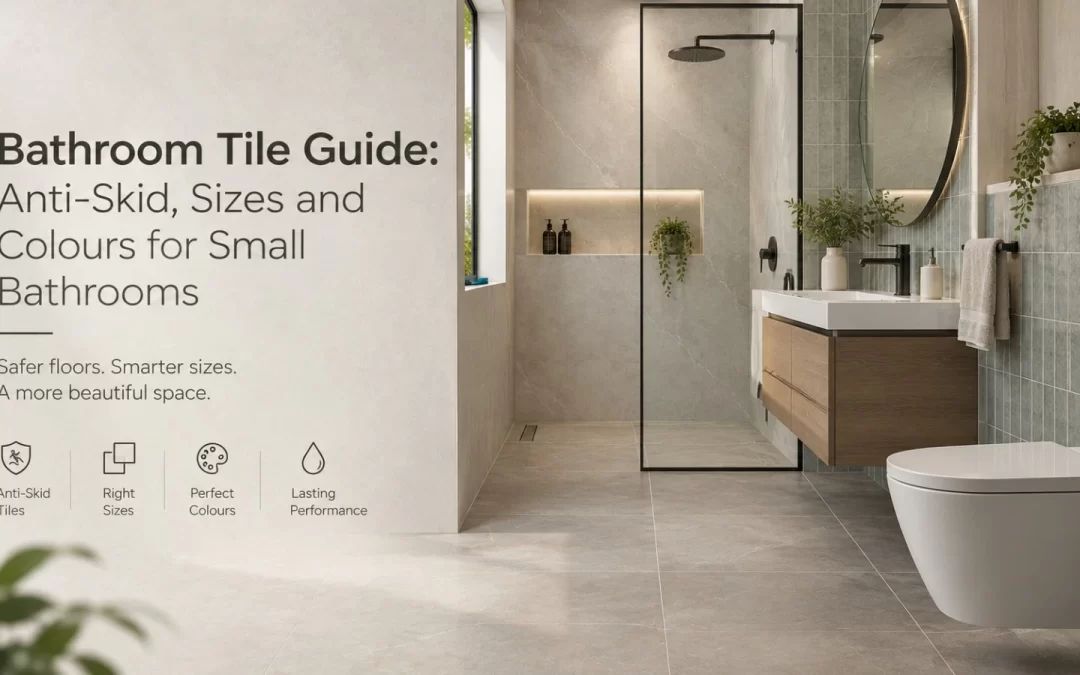
Bathroom Tiles Guide –
Choosing the right bathroom tiles is about much more than selecting a colour you like. Bathroom surfaces need to handle moisture, frequent cleaning, temperature changes and everyday foot traffic while also complementing the overall style of your home. For homeowners looking for bathroom tiles in Delhi, the choices can feel overwhelming, especially when designing a compact bathroom.
The right combination of anti skid bathroom tiles, practical sizes, suitable colours and durable finishes can make a small bathroom feel safer, more spacious and easier to maintain.
In this guide, we’ll explain how to choose bathroom wall tiles and bathroom floor tiles, what anti-skid ratings and textures mean, which tile sizes work best in small bathrooms, and how waterproofing and grout contribute to long-term performance.
Whether you are renovating an existing bathroom or designing a new one, this guide will help you make a more informed tile selection.
1. Wall vs Floor Tiles: Different Jobs
One of the first things to understand when selecting bathroom tiles is that wall and floor tiles have different requirements.
Bathroom Wall Tiles
Bathroom walls are exposed to water, humidity and regular cleaning, but they generally do not experience the same direct load and friction as floors. This gives you greater flexibility when selecting wall tiles.
Bathroom wall tiles are available in numerous colours, patterns, textures, finishes and sizes. Glossy finishes can reflect light and help a compact bathroom appear brighter, while matte or textured designs can create a more sophisticated appearance.
Large-format wall tiles are also popular because they can reduce the number of visible grout lines. Fewer grout joints can create a cleaner, more continuous appearance.
Explore the BR Ceramics wall tiles range to discover different styles and options for bathroom interiors.
Bathroom Floor Tiles
Bathroom floors need a different approach. They are exposed to water, soap residue and regular foot traffic, which makes slip resistance particularly important.
When choosing bathroom floor tiles, consider:
- Slip resistance
- Surface texture
- Water resistance
- Ease of cleaning
- Durability
- Tile size
- Overall bathroom design
For wet areas, anti skid bathroom tiles are generally a safer choice than highly polished surfaces.
It is also important to coordinate floor and wall tiles rather than simply matching them exactly. A contrasting floor can create visual definition, while complementary shades can produce a more seamless interior.
For homeowners exploring bathroom tiles in Delhi, it is worth visiting a professional tile showroom where you can compare textures, finishes, colours and actual tile samples before making your final selection.
2. Anti-Skid Ratings and Textures
Safety should be one of the most important considerations when selecting bathroom flooring.
Water can make smooth surfaces slippery, particularly around showers, bathtubs and wash areas. This is why anti-slip performance should be considered before selecting a bathroom floor tile based purely on appearance.
What Are Anti-Skid Bathroom Tiles?
Anti skid bathroom tiles are designed with surface characteristics that provide better traction underfoot. Depending on the tile, this can be achieved through surface texture, finish or manufacturing technology.
However, not every textured tile performs in exactly the same way. When comparing products, ask about the manufacturer’s slip-resistance specifications and the intended application.
Matte vs Glossy Tiles
Glossy tiles are visually attractive and can reflect light, making them particularly useful on walls. However, a highly polished surface may not be the first choice for a wet bathroom floor.
Matte and textured finishes are often more suitable for flooring because they can provide better grip.
For a small bathroom, one practical approach is:
Walls: Glossy, satin, matte or decorative finishes depending on the design.
Floor: Matte or suitably textured anti-slip surfaces.
Shower area: Prioritise slip resistance and easy maintenance.
Texture Matters
Texture can add depth to a bathroom, but extremely deep textures may collect dirt, soap residue and mineral deposits.
For homeowners, the ideal bathroom floor is therefore a balance between:
Safety + Style + Easy Maintenance
If you live in Delhi or the surrounding NCR region, also consider the water quality and cleaning routine in your home. Tile surfaces should be easy to clean without requiring excessive scrubbing.
3. Best Sizes for Small Bathrooms
Tile size can significantly influence how a compact bathroom looks.
There is a common misconception that small bathrooms should always use small tiles. In reality, larger tiles can often make a small bathroom appear more spacious because they create fewer grout lines.
Large-Format Tiles
Large-format tiles can create a cleaner visual appearance by reducing the number of joints across a wall or floor.
For example, a larger tile can make the floor look more continuous rather than divided into numerous small sections.
This approach works particularly well when:
- The bathroom has a simple layout
- You want a modern appearance
- The walls are relatively straight
- You prefer fewer grout lines
- You want easier visual continuity
However, installation becomes more important with larger tiles. The floor should have appropriate slope toward the drain, and the substrate should be properly prepared.
Medium-Sized Tiles
Medium-sized tiles offer a versatile solution for many bathrooms. They provide enough visual continuity without making installation overly complicated.
They can work especially well when you want to combine different tile patterns or create a subtle design feature.
Small Tiles and Mosaics
Small tiles and mosaics remain excellent choices for specific areas.
They can be useful for:
- Shower floors
- Niches
- Borders
- Feature walls
- Curved surfaces
- Decorative strips
Mosaic tiles provide more grout joints, which can increase visual detail and improve grip in certain applications. However, additional grout lines also mean more cleaning and maintenance.
You can explore BR Ceramics mosaic tiles for decorative options that can be incorporated into bathroom designs.
What Size Should You Choose?
Rather than choosing a tile size simply because the bathroom is small, consider the complete layout.
Think about:
- Wall dimensions
- Floor dimensions
- Door and window positions
- Drain location
- Shower area
- Vanity size
- Desired design style
- Number of grout joints
A professional tile consultant can help you select a size that minimises awkward cuts and creates a balanced appearance.
4. Colour and Pattern Ideas for Small Bathrooms
Colour can dramatically affect how a small bathroom feels.
Light colours generally reflect more light and can make a compact space feel open and airy. However, this does not mean every small bathroom needs to be completely white.
Light and Neutral Colours
Popular choices include:
- White
- Off-white
- Beige
- Cream
- Light grey
- Soft taupe
- Light stone shades
These colours can create a clean and spacious appearance.
For homeowners who want a timeless bathroom, neutral tiles are also easier to coordinate with sanitaryware, vanity units, mirrors and accessories.
Add Contrast Through the Floor
One effective small bathroom tile design is to use relatively light wall tiles with a slightly darker floor.
For example:
Light grey walls + medium grey floor
or
Warm beige walls + stone-effect floor
This creates visual separation without making the room feel crowded.
Use Patterns Carefully
Patterns can add personality, but too many competing patterns may make a small bathroom look visually busy.
Instead, consider using a decorative tile on:
- One feature wall
- The shower niche
- A narrow vertical section
- The vanity backdrop
This gives the bathroom a focal point without overwhelming the space.
Vertical Patterns
Vertical layouts can visually draw the eye upward and make a bathroom appear taller.
A vertical decorative strip or vertically oriented tile installation can be particularly effective in bathrooms with low ceilings.
Consistent Colour Palette
Another effective approach is to use different textures within the same colour family.
For example:
Light beige wall tile + textured beige floor tile + slightly darker mosaic niche
This creates variation while maintaining visual harmony.
When selecting small bathroom tiles design ideas, remember that simplicity often produces the most sophisticated result.
5. Waterproofing and Grout Tips
Even the best tiles cannot compensate for poor waterproofing or installation.
Tiles form the visible finished surface, but the waterproofing system underneath plays an essential role in protecting your bathroom structure.
Waterproofing Comes First
Before tiles are installed, the underlying surface should be properly prepared and waterproofed according to the project’s requirements.
Particular attention should be given to:
- Shower areas
- Floor-wall junctions
- Pipe penetrations
- Drain areas
- Corners
- Wet zones
Waterproofing should be treated as part of the overall bathroom construction process rather than an optional extra.
Proper Slope to the Drain
Bathroom floors should generally be designed with an appropriate slope so that water moves toward the drain rather than collecting in low spots.
This is especially important when installing large-format bathroom floor tiles.
A professional installer should check the floor level and drainage before final tile installation.
Choosing the Right Grout
Grout fills the joints between tiles and contributes to the overall appearance of the bathroom.
For bathroom applications, consider grout that is appropriate for wet areas and follow the manufacturer’s recommendations for application and maintenance.
The colour of grout also affects the visual result.
Matching grout: Creates a more continuous appearance.
Contrasting grout: Makes tile patterns and individual tiles more noticeable.
For a small bathroom, a grout colour close to the tile can help create a cleaner, less fragmented appearance.
Keep Grout Clean
Grout can accumulate soap residue, dirt and moisture over time. Regular cleaning helps maintain the appearance of the bathroom.
Adequate ventilation is equally important. A good exhaust system and proper airflow can help reduce prolonged moisture and humidity.
6. How to Choose Bathroom Tiles in Delhi
Delhi homeowners have access to a wide variety of tile styles, sizes, finishes and price points. With so many choices available, it is important to compare tiles based on both appearance and performance.
Before buying, consider creating a simple checklist:
1. Identify the application
Decide whether you need tiles for:
- Bathroom walls
- Bathroom floors
- Shower areas
- Vanity walls
- Feature walls
- Niches
2. Choose the required performance
For flooring, prioritise:
- Slip resistance
- Durability
- Easy maintenance
- Suitable surface texture
For walls, focus more on:
- Design
- Colour
- Finish
- Size
- Ease of cleaning
3. Consider the bathroom size
Measure the floor and wall areas before visiting a showroom. This allows you to compare tile sizes more effectively and estimate quantities.
4. View physical samples
Images on a screen cannot always show the exact colour, texture or finish of a tile.
Whenever possible, view physical samples under different lighting conditions.
5. Think about the complete bathroom
Do not select tiles in isolation.
Consider how they will work with:
- Sanitaryware
- Faucets
- Vanity
- Mirror
- Shower fittings
- Lighting
- Doors
- Bathroom accessories
The best bathroom design is usually one where all these elements work together.
FAQs
Are anti skid bathroom tiles necessary?
Anti-skid performance is particularly important for bathroom floors because water can make surfaces slippery. When selecting floor tiles, consider the manufacturer’s slip-resistance specifications and the intended wet-area application.
Which tiles are best for a small bathroom?
There is no single best size for every small bathroom. Medium and large-format tiles can create fewer grout lines and a more spacious appearance, while smaller tiles and mosaics can be useful for shower floors and decorative areas.
Are glossy tiles suitable for bathroom walls?
Yes. Glossy bathroom wall tiles can reflect light and create a bright, clean appearance. However, for flooring, a suitable matte or textured anti-slip finish is generally worth considering.
What colour tiles make a small bathroom look bigger?
Light and neutral colours such as white, cream, beige and light grey can help reflect light and create a more open appearance. Using a consistent colour palette can also reduce visual clutter.
Can I use mosaic tiles in a small bathroom?
Yes. Mosaic tiles can be used for feature walls, niches, borders and selected floor areas. They can add texture and visual interest while allowing you to create detailed designs.
How do I choose between bathroom wall tiles and floor tiles?
Start with the function of each surface. Floors require suitable slip resistance, durability and easy maintenance, while walls provide greater flexibility for colour, finish, texture and decorative design.
How many tiles should I buy?
The quantity depends on the total surface area, tile size, installation pattern and required allowance for cuts and breakage. A tile professional can help calculate the appropriate quantity after measuring the space.
Where can I find bathroom tiles in Delhi?
Homeowners can visit a professional tile showroom to compare bathroom floor tiles, bathroom wall tiles, anti-skid finishes, colours, textures and sizes in person. Viewing physical samples makes it easier to make a confident selection.
Final Thoughts
Selecting bathroom tiles is a combination of design, safety, durability and practicality.
For a small bathroom, focus on creating visual continuity without compromising performance. Choose suitable anti skid bathroom tiles for wet floors, consider larger or medium formats to reduce excessive grout lines, and use light colours or carefully selected patterns to make the room feel more spacious.
For walls, you have more freedom to experiment with finishes, textures and decorative designs. Mosaics can be used strategically to create feature areas, while coordinated floor and wall tiles can produce a polished overall look.
Most importantly, do not overlook waterproofing, drainage, installation quality and grout maintenance. These elements are just as important as the tile design itself.
If you are exploring bathroom tiles in Delhi and want to compare different sizes, colours, textures and finishes, explore the BR Ceramics collection and find options suited to your bathroom project.
View the Bathroom Tile Range
Explore the BR Ceramics Bathroom Tiles collection and discover bathroom wall tiles, bathroom floor tiles and design options for modern homes.
Visit BR Ceramics to explore the range and find the right tiles for your bathroom.