
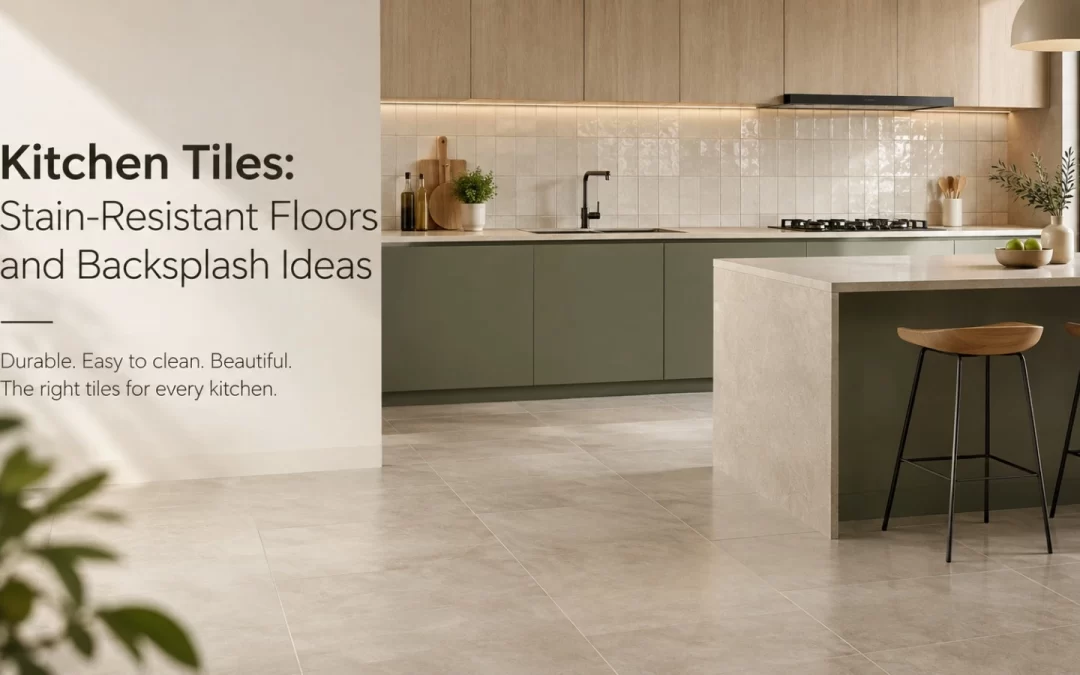
kitchen tiles design – The kitchen is one of the busiest spaces in any Indian home. From daily cooking and meal preparation to family gatherings and festive celebrations, kitchen surfaces are exposed to moisture, oil splashes, food stains, heat and constant foot traffic. Choosing the right tiles can therefore make a significant difference to both the appearance and everyday maintenance of your kitchen.
The right kitchen tiles design should do more than look attractive. It should provide durability, easy cleaning, good slip resistance and a style that complements your cabinets, countertops and overall interiors.
Whether you are renovating an existing kitchen or designing a new one, this guide will help you explore practical options for kitchen floor tiles, kitchen backsplash tiles and kitchen wall tiles in India, along with colour combinations, grout choices and maintenance considerations.
1. What Indian Kitchens Demand from Tiles
Indian kitchens can have different requirements depending on cooking habits, family size, ventilation and the type of cooking carried out every day. However, a few characteristics are important for almost every kitchen.
Resistance to stains and oil
Oil, spices, sauces and food particles can quickly leave marks on poorly chosen surfaces. For areas close to the cooking platform, selecting tiles with a smooth, easy-to-clean surface can make daily maintenance much easier.
Oil resistant tiles are particularly useful for backsplashes and walls behind cooking counters, where oil and food splashes are more likely to occur.
Easy maintenance
Kitchen surfaces need frequent cleaning. Tiles that can be wiped easily without requiring aggressive cleaning chemicals are generally more convenient for everyday use.
Large-format tiles can also reduce the number of joints, which may mean fewer grout lines to clean. However, the size and format should always be selected according to the kitchen layout and installation requirements.
Slip resistance for floors
Water, oil or cleaning liquid can occasionally reach the kitchen floor. This makes slip resistance an important consideration when selecting kitchen floor tiles.
A floor tile should offer a suitable balance between grip and cleanability. Extremely rough surfaces may provide additional traction but can sometimes be more difficult to clean, while highly polished surfaces may not be ideal for areas where water or oil can accumulate.
Durability
Kitchen floors experience regular foot traffic, movement of appliances and occasional impact from dropped utensils or cookware. A durable tile can help maintain the appearance of the kitchen for years.
For homeowners comparing different options, it is useful to consider not just the appearance of a tile but also its suitability for the specific application.
Style
Functionality does not mean compromising on design. Today’s kitchen tiles are available in numerous colours, patterns, textures and formats.
From clean white subway tiles to colourful mosaics and contemporary patterned surfaces, your tile selection can become an important part of the kitchen’s visual identity.
For homeowners looking for a dedicated collection, explore BR Ceramics’ kitchen tiles collection for options suitable for different kitchen styles.
2. Kitchen Floor Tiles: Anti-Skid and Stain-Resistant Picks
The kitchen floor has different requirements from a backsplash. While the wall needs to handle splashes and stains, the floor needs to handle movement, moisture and regular foot traffic.
Choose an appropriate anti-skid surface
Safety should be one of the first considerations when choosing floor tiles. An anti-skid or slip-resistant finish can provide better traction when the floor becomes wet.
However, there is no single tile surface that is ideal for every kitchen. Consider how much water is normally used, whether the kitchen is enclosed or open-plan and how frequently the floor is cleaned.
Consider neutral colours
For busy kitchens, neutral shades such as beige, grey, ivory, cream and soft taupe can be practical choices.
These colours can work well with both light and dark cabinetry and can create a clean visual foundation for the rest of the kitchen.
For example:
- White cabinets + grey floor tiles: Modern and understated
- Wood-finish cabinets + beige tiles: Warm and natural
- Dark cabinets + light stone-look tiles: Creates contrast
- Green or blue cabinets + neutral floor: Keeps the overall look balanced
Stone-look kitchen floor tiles
Stone-inspired surfaces can give a kitchen a sophisticated appearance without overwhelming the space. Marble-look, limestone-inspired and concrete-look designs can work particularly well in contemporary kitchens.
If you prefer a minimalist interior, a subtle stone pattern can provide visual texture without introducing a strong decorative pattern.
Large-format floor tiles
Large-format tiles can create a more seamless appearance by reducing the number of visible grout lines. They can be particularly effective in larger kitchens or open-plan spaces.
However, installation should be carefully planned because proper substrate preparation and levelling become increasingly important as tile size increases.
Don’t select tiles based only on appearance
A beautiful tile may not necessarily be the best choice for the floor. Before finalising your selection, consider:
- Slip resistance
- Surface finish
- Durability
- Ease of cleaning
- Tile size
- Installation requirements
- Compatibility with your kitchen layout
The goal is to find a tile that combines practical performance with the desired kitchen tiles design.
3. Kitchen Backsplash Ideas: Subway, Mosaic and Patterned Tiles
The backsplash is one of the best areas to introduce personality into a kitchen. Since it occupies a relatively limited area, homeowners can experiment with colour, texture and patterns without changing the entire space.
Subway tiles for a timeless look
Subway tiles remain popular because their simple rectangular format works with a wide range of kitchen styles.
Traditional white subway tiles can create a bright, clean appearance, while darker grout can make the tile pattern more visible.
For a contemporary interpretation, consider:
- Soft beige subway tiles
- Grey subway tiles
- Glossy coloured subway tiles
- Oversized subway formats
- Contrasting grout
- Vertical subway installation
You can explore the BR Ceramics subway tiles collection for inspiration.
Subway tiles work particularly well when the kitchen already has visually strong cabinets or countertops because they provide texture without competing for attention.
Mosaic tiles for visual interest
Mosaic tiles can transform a backsplash into a focal point. Small-format mosaics are available in different materials, colours, shapes and patterns.
They can be used across the entire backsplash or restricted to a particular zone, such as the wall behind the hob.
Mosaic designs work especially well when the rest of the kitchen is relatively simple.
For example, a neutral kitchen with plain cabinets can be enhanced with a geometric or textured mosaic backsplash.
Browse the BR Ceramics mosaic tiles collection to explore different possibilities.
Patterned kitchen wall tiles
Patterned tiles are another way to add character to a kitchen. Geometric patterns, botanical-inspired designs, decorative motifs and contemporary prints can create a distinctive interior.
However, strong patterns should be balanced with simpler elements elsewhere.
If your cabinets already have a bold colour or your countertop features dramatic veining, a subtle backsplash may work better. Conversely, a simple white or neutral kitchen can provide an excellent canvas for patterned tiles.
Full-height backsplash
Instead of stopping the backsplash at the bottom of the cabinets, some homeowners extend the tile higher up the wall.
A full-height backsplash can create a stronger architectural appearance while providing additional protection from splashes.
It can be particularly effective behind open shelves or around cooking zones.
4. Colour Combinations with Cabinets and Counters
Choosing the right tile colour is often easier when you consider the entire kitchen rather than selecting tiles in isolation.
White cabinets
White cabinetry provides considerable flexibility.
Try:
- White + light grey
- White + beige
- White + marble-look tiles
- White + muted green backsplash
- White + patterned mosaic
For a minimalist kitchen, matching light floor and wall tones can create a spacious appearance.
Wooden cabinets
Wood-effect or natural wood cabinets pair well with earthy tile colours.
Consider:
- Beige
- Cream
- Warm grey
- Terracotta-inspired shades
- Stone-look tiles
- Muted green
The combination creates a warm and welcoming kitchen without appearing overly decorative.
Grey cabinets
Grey cabinetry works particularly well with both warm and cool tile colours.
A lighter grey floor can create a seamless contemporary appearance, while a white subway backsplash can introduce brightness.
For a more dramatic look, consider a darker backsplash with lighter flooring.
Green or blue cabinets
Colourful cabinetry is increasingly popular in modern kitchens. When using bold cabinet colours, neutral kitchen wall tiles in India can prevent the room from feeling visually crowded.
For example, sage green cabinets can be paired with cream or off-white tiles, while navy cabinets can work with white, light grey or marble-look surfaces.
Dark cabinets and countertops
If you have dark cabinetry or a dark countertop, lighter tiles can help maintain visual balance.
Cream, ivory, white and pale grey tiles can reflect more light and make the kitchen feel more open.
The simplest approach is to select one dominant colour, one supporting colour and one accent colour, then use tiles to connect these elements.
5. Easy-Clean Grout Choices
Grout is often overlooked when homeowners select tiles, but it can have a significant impact on kitchen maintenance.
The grout sits between tiles and can collect dust, grease and food residue. Choosing a suitable grout colour and type can therefore make the backsplash and floor easier to maintain.
Match grout with the tile
Matching grout closely with the tile colour creates a more continuous appearance and can make the surface look less visually busy.
For example, light grey grout with grey tiles can create a seamless effect.
Use contrasting grout for definition
If you want to highlight a tile pattern, contrasting grout can make individual tiles more prominent.
This works particularly well with subway tiles.
White subway tiles with darker grout, for example, create a strong linear pattern.
Consider darker grout for busy areas
For areas that are more likely to experience staining, a medium or darker grout colour can be easier to maintain visually than very light grout.
However, grout selection should also consider the tile material, joint width, cleaning requirements and installation conditions.
Keep grout lines clean
Regardless of the colour, regular cleaning is important. Wipe kitchen backsplash surfaces regularly, particularly around the cooking zone.
Avoid allowing oil and food residue to build up over long periods, as older stains can become more difficult to remove.
6. How to Choose the Right Kitchen Tile Design
Before finalising your kitchen tile selection, create a simple checklist based on your space and lifestyle.
For the floor, ask:
- Is the tile suitable for regular foot traffic?
- Does it provide suitable slip resistance?
- Is the surface easy to clean?
- Does the colour work with the cabinets?
- Is the size appropriate for the room?
For the backsplash, ask:
- Is the surface easy to wipe?
- Can it handle regular splashes?
- Does the design complement the countertop?
- Will the grout be easy to maintain?
- Does the pattern suit the overall kitchen?
For small kitchens
Light-coloured tiles can help create an open and airy appearance. Subway tiles, light stone-look tiles and simple mosaics can work well without visually overwhelming the room.
For large kitchens
Larger formats, dramatic patterns and statement backsplashes can be considered because there is more space to accommodate visual detail.
For modern kitchens
Minimalist colours, large-format tiles, concrete-inspired surfaces and subtle patterns can complement contemporary cabinetry.
For traditional kitchens
Subway tiles, warm neutral tones, decorative mosaics and classic stone-inspired designs can create a timeless appearance.
FAQs About Kitchen Tiles
1. Which tiles are best for kitchen floors?
The best kitchen floor tiles should combine durability, suitable slip resistance, easy maintenance and a surface appropriate for regular kitchen use. Neutral stone-look and contemporary large-format tiles are popular choices, but the right option depends on the kitchen layout and requirements.
2. Are kitchen tiles stain-resistant?
Many modern tiles have surfaces that are relatively easy to clean and maintain. However, stain resistance varies depending on the tile material, finish and installation. Always check the manufacturer’s specifications before making a final selection.
3. What are the best tiles for a kitchen backsplash?
Subway tiles, mosaics, patterned tiles and easy-clean ceramic or porcelain options can all work well for kitchen backsplashes. The ideal choice depends on your preferred design, maintenance expectations and surrounding cabinets and countertops.
4. Are subway tiles suitable for Indian kitchens?
Yes. Subway tiles can be a practical and stylish option for Indian kitchens, particularly for backsplash areas. Their simple shape works with contemporary and traditional interiors, while their relatively straightforward surface can be easy to maintain.
5. What colour tiles make a kitchen look bigger?
Light colours such as white, cream, beige and light grey can help a kitchen appear brighter and more spacious. Using similar tones across the floor and walls can also create visual continuity.
6. Are mosaic tiles suitable for kitchen walls?
Yes. Mosaic tiles can be an excellent choice for kitchen backsplashes and feature walls. They allow homeowners to introduce colour, texture and patterns into otherwise simple kitchens.
7. What are oil resistant tiles?
Oil resistant tiles are surfaces designed to offer good resistance to oil-related staining and make cleaning easier. They can be particularly useful around kitchen cooking areas where oil and food splashes are common. Always check the product’s technical specifications for its actual resistance and recommended application.
8. Should kitchen floor and wall tiles match?
They do not necessarily need to match. Coordinating colours, textures or patterns can create a more interesting design while maintaining visual harmony. For example, a neutral floor can be paired with a patterned backsplash.
9. What grout colour is best for kitchen tiles?
The ideal grout colour depends on the tile and the desired appearance. Matching grout creates a seamless look, while contrasting grout highlights the tile pattern. Medium or darker grout can also be practical in areas where staining is more noticeable.
10. How do I choose kitchen tiles for my home?
Start by separating the requirements for flooring and walls. For floors, prioritise durability, slip resistance and easy maintenance. For backsplashes, focus on stain resistance, cleanability and design. Then coordinate your tile selection with the cabinets, countertops, lighting and overall interior style.
Create a Kitchen That Works as Beautifully as It Looks
The right kitchen tiles can make everyday cooking and cleaning easier while giving your home a distinctive interior style. From practical kitchen floor tiles and easy-clean backsplash surfaces to decorative mosaics and timeless subway designs, there are options for almost every type of kitchen.
When comparing kitchen tiles design ideas, focus on the balance between appearance and performance. Consider where the tile will be installed, how much exposure it will have to water and oil, how frequently it will be cleaned and how it will coordinate with the rest of your kitchen.
Whether you are creating a compact apartment kitchen or a spacious family kitchen, choosing the right combination of floor, wall and backsplash tiles can make the entire space feel more cohesive.
Ready to explore your options?
Browse kitchen tiles at BR Ceramics and discover designs for floors, backsplashes and kitchen walls that combine style with everyday practicality.